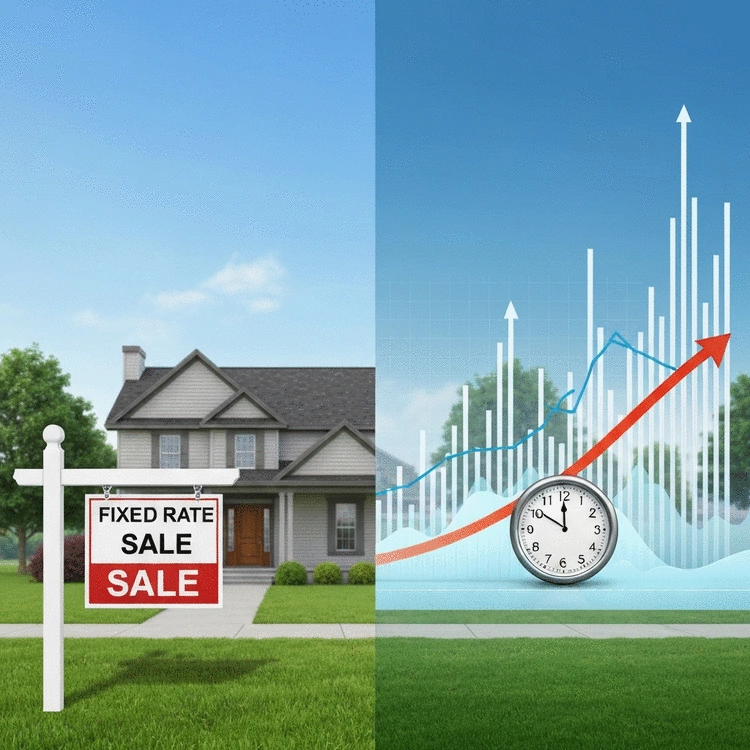

Are you ready to take control of your mortgage journey? Understanding the differences between fixed-rate and adjustable-rate mortgages could be the key to unlocking the best financial decision for your future.
What You Will Learn
- Fixed-rate mortgages provide consistent monthly payments, ideal for long-term budgeting.
- Adjustable-rate mortgages (ARMs) offer lower initial rates, making them appealing for short-term homeowners.
- The introductory fixed period in ARMs allows for stable payments initially, reducing financial pressure as you settle into your home.
- Understanding your credit score and debt-to-income ratio is crucial for securing favorable mortgage terms.
- Aligning your mortgage choice with your financial goals can significantly impact long-term success in homeownership.
- Utilizing resources like interactive calculators can aid in comparing loan options and clarifying your financial capacity.
Fixed-Rate vs. Adjustable-Rate Mortgages: A Comparison
Navigating mortgage options can be complex. Below is a clear comparison of Fixed-Rate and Adjustable-Rate Mortgages based on their key features.
Fixed-Rate Mortgage
Offers stability with an interest rate that remains constant throughout the loan term, providing predictable monthly payments.
- Predictable Payments
- Long-Term Stability
- Protection Against Rising Rates
Adjustable-Rate Mortgage (ARM)
Features an interest rate that can fluctuate based on market conditions, potentially leading to lower initial payments.
- Lower Initial Rates
- Potential for Rate Adjustments
- Flexibility for Short-Term Plans
Key ARM Mechanics
ARMs include an introductory fixed period, followed by rate adjustments tied to market indexes and limited by caps.
- Introductory Fixed Period
- Index-Linked Adjustments
- Rate Caps for Protection
Financial Goals & Eligibility
Your credit score, debt-to-income ratio, and financial goals significantly influence mortgage approval and rates.
- Stable vs. Lower Initial Payments
- Credit Score Impact
- Debt-to-Income Ratio
Understanding Fixed vs. Adjustable-Rate Mortgages
When you're considering your options for financing a home, one of the most crucial decisions you'll face is whether to go with a fixed-rate mortgage or an adjustable-rate mortgage (ARM). Each option has its unique features and benefits, and understanding these can empower you to make informed decisions tailored to your financial goals. Let’s dive into what these mortgages entail!

At HomeMortgage-Guide.org, we aim to demystify the mortgage process so that you can feel confident in your choices. By breaking down the essentials, we hope to set you on the right path in your homeownership journey!
Defining Fixed-Rate Mortgages
A fixed-rate mortgage is pretty straightforward: the interest rate remains consistent throughout the life of the loan. This means your monthly payments stay the same, providing a sense of stability as you plan your finances. It’s like having a steady ship on a calm ocean—no surprises!
- Predictable Payments: You can budget easily since your payment won’t change.
- Long-Term Stability: Ideal for those who plan to stay in their home for many years.
- Protection Against Rising Rates: If rates increase, you won’t be affected.
This predictability is particularly appealing for first-time homebuyers or anyone looking for long-term financial security.
Defining Adjustable-Rate Mortgages (ARMs)
Now, let's talk about adjustable-rate mortgages, or ARMs. Unlike fixed-rate mortgages, the interest rate on an ARM can fluctuate over time based on market conditions. This means your monthly payments can change, which might sound a bit daunting, but it can also lead to significant savings, especially in the early years of your loan!
- Lower Initial Rates: ARMs often start with lower interest rates compared to fixed loans.
- Potential for Rate Adjustments: Payments can increase or decrease depending on market conditions.
- Flexibility: May be ideal for short-term homeowners or investors.
With this option, you can save money upfront, but you'll need to keep an eye on how rates might change in the future.
Key Mechanics of Adjustable-Rate Mortgages
Understanding the mechanics of ARMs is essential for making a sound decision. One important aspect is the introductory fixed period. This is the initial phase where your rate remains unchanged, generally ranging from 3 to 10 years. After this period, your rate will adjust periodically.
Introductory Fixed Periods Explained
During the introductory fixed period, you can enjoy lower payments without worrying about adjustments. It’s a great way to get settled into your home without the pressure of fluctuating payments right away!
Understanding Rate Adjustments: Indexes and Caps
After the initial period, your rate adjustments are linked to an index, which reflects changes in the broader market. Most ARMs have caps that limit how much your interest rate can increase at each adjustment and over the life of the loan. This offers some protection against sharp hikes in rates.
The Role of ARM Index and Margin in Rate Changes
The ARM index is a benchmark interest rate that lenders use to determine rate changes. The margin is the percentage added to the index to calculate your new rate. Being aware of these components is crucial for understanding how your payments might change over time.
In summary, while fixed-rate mortgages offer stability and predictability, adjustable-rate mortgages can provide initial savings and flexibility. Understanding these key concepts will help you navigate your mortgage options with confidence at HomeMortgage-Guide.org!
We Want to Hear From You!
When it comes to choosing between a fixed-rate mortgage and an adjustable-rate mortgage, what factor weighs the heaviest for you? Is it the stability of fixed payments, or the potential for lower initial costs with an ARM? Share your thoughts below:
Summarizing Key Takeaways on Mortgage Choices
When it comes to selecting the right mortgage, it's essential to weigh the stability offered by fixed-rate mortgages against the potential affordability of adjustable-rate mortgages. Each option has its own unique advantages and challenges, and understanding these can help you make the best choice for your situation. For instance, if you value consistent monthly payments, a fixed-rate mortgage might be your best fit. Conversely, if you're looking to save on payments initially, considering an ARM could be advantageous.
Ultimately, your decision should reflect your personal financial situation and goals. Reflect on your plans for homeownership and how each mortgage type aligns with your long-term objectives. Let’s dive deeper into how to identify what’s best for you!

Identifying Your Financial Goals for Mortgage Selection
Before diving into mortgage options, it's crucial to clarify your financial goals. Ask yourself what you want to achieve with your mortgage. Are you looking for stability in your payments, or are you more focused on lower initial costs? Understanding these goals can significantly impact your mortgage selection process.
- Stable monthly payments for budgeting ease
- Lower initial costs to maximize cash flow
- Plans for home investment and resale potential
Once you articulate these goals, it becomes easier to evaluate whether a fixed or adjustable-rate mortgage aligns with your financial strategy. Remember, aligning your mortgage choice with your financial objectives is crucial for long-term success!
Impact of Credit Score and Debt-to-Income Ratio on Mortgage Approval
Another essential factor in your mortgage selection process is your credit score and debt-to-income ratio. These two elements play a significant role in determining your eligibility and the interest rates you're offered. Lenders look favorably upon higher credit scores and lower debt ratios, as these indicate a lower risk for loan defaults.
- Credit Score: A higher score often leads to better interest rates.
- Debt-to-Income Ratio: This measures your monthly debt payments against your gross monthly income, with lower ratios being more favorable.
- Loan Terms: These factors can affect the types of loans you qualify for and how much you can borrow.
By understanding these metrics and working to improve them, you can position yourself for the best possible mortgage options that suit your needs! For a more detailed look at what lenders consider, check out our guide on the mortgage approval document checklist.
Next Steps for Prospective Homebuyers
Utilizing Resources for Personalized Mortgage Planning
As you navigate your mortgage journey, take advantage of various resources designed to help you make informed decisions. At HomeMortgage-Guide.org, I provide tools and articles that can guide you through the complexities of mortgage planning. Whether you're a first-time homebuyer or looking to refinance, leveraging these resources can empower your decision-making process.
Consider utilizing interactive calculators that enable you to compare different loan options and assess your financial capacity. These tools can help clarify what you can afford and set realistic expectations!
Encouraging Informed Decision-Making in Mortgage Choices
Making an informed decision about your mortgage is vital for your financial well-being. As you weigh your options, connect with mortgage lenders or brokers who can provide insights tailored to your specific circumstances. They can help you explore different loan products and potentially find better rates that suit your financial situation.
Connecting with Mortgage Lenders and Brokers for Better Rates
To enhance your mortgage experience, reach out to reputable lenders and brokers. They can offer valuable advice on:
- Current interest rates and market trends
- Loan program options that fit your needs
- Strategies for improving approval chances
Engaging with professionals can make a significant difference in your mortgage process, helping you secure a loan that aligns perfectly with your financial goals!
Recap of Key Points
Here is a quick recap of the important points discussed in the article:
- Fixed-Rate Mortgages: Provide predictable payments and long-term stability, ideal for those planning to stay in their home for many years.
- Adjustable-Rate Mortgages (ARMs): Offer lower initial rates and potential savings, but come with payment fluctuations based on market conditions.
- Introductory Fixed Periods: Allow you to enjoy lower payments initially without immediate rate adjustments, typically lasting from 3 to 10 years.
- Understanding Rate Adjustments: Know the indexes and caps that limit how much your interest rate can change over time.
- Financial Goals: Clarifying your financial goals can help you choose between stability in payments or lower initial costs.
- Importance of Credit Score: A higher credit score and better debt-to-income ratios can lead to more favorable loan options.
Frequently Asked Questions (FAQs)
What is the main difference between a fixed-rate and an adjustable-rate mortgage?
A fixed-rate mortgage has an interest rate that remains constant throughout the loan term, providing predictable monthly payments. An adjustable-rate mortgage (ARM) has an interest rate that can fluctuate based on market conditions after an initial fixed period, meaning monthly payments can change.
Who is a fixed-rate mortgage best suited for?
Fixed-rate mortgages are ideal for individuals who plan to stay in their home for many years and prefer predictable monthly payments for long-term budgeting and financial stability. They also offer protection against rising interest rates.
What are the benefits of an adjustable-rate mortgage (ARM)?
ARMs often start with lower interest rates compared to fixed-rate mortgages, which can lead to lower initial monthly payments. They can be ideal for short-term homeowners or investors who might sell or refinance before the adjustable period begins.
How do ARM rate adjustments work?
After an initial fixed period (typically 3 to 10 years), the interest rate on an ARM adjusts periodically based on a benchmark index and a set margin. Most ARMs also include caps that limit how much the rate can increase during each adjustment period and over the life of the loan, offering some protection.
How do my credit score and debt-to-income ratio affect my mortgage options?
Your credit score and debt-to-income ratio are critical factors lenders use to determine your eligibility and the interest rates you qualify for. A higher credit score and a lower debt-to-income ratio generally lead to more favorable interest rates and better loan options, as they indicate lower risk to lenders. For more information on what lenders look for, consider reviewing the mortgage approval checklist for beginners.
Where can I find resources to help me plan my mortgage?
Websites like HomeMortgage-Guide.org offer various tools and articles, including interactive calculators, to help you compare loan options and assess your financial capacity. Connecting with reputable mortgage lenders or brokers can also provide personalized advice and help you secure the best rates.